
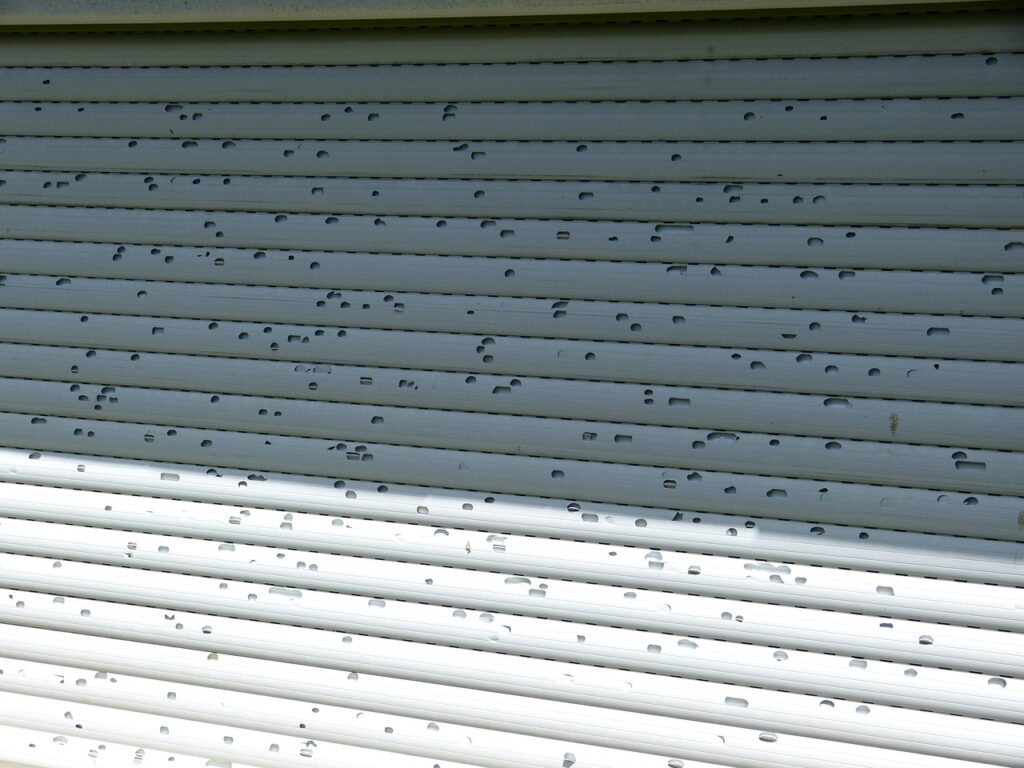
Georgia storms can be unpredictable — and when hail hits, your roof takes the brunt of the damage. What looks like a few harmless dents can quickly turn into leaks, rot, and thousands of dollars in repairs.
So how can you tell if your roof has hail damage after a Georgia storm? And what should you do if you suspect it does?
In this guide, we’ll walk you through how to spot hail damage on your roof, what the telltale signs look like for different materials, and how to handle insurance claims the smart way. Whether you’re in Alpharetta, Cumming, Johns Creek, or Suwanee, this step-by-step breakdown will help you protect your roof — and your wallet.
What Hail Damage Looks Like on a Roof
The first step in spotting hail damage is knowing what you’re looking for.
When hail impacts a roof, it strikes the surface with enough force to crack, bruise, or dislodge the protective granules on shingles. This weakens the shingle’s UV resistance and waterproof barrier — leading to leaks over time.
Here’s what typical hail damage on Georgia roofs looks like:
- Dark circular spots or bruises: Areas where granules are missing, exposing black substrate.
- Soft, spongy spots: Press lightly; if it feels soft, the mat underneath is broken.
- Shingle cracks: Small lines or fissures radiating from impact points.
- Metal dents: Check roof vents, flashing, and gutters — they often reveal hail patterns first.
- Displaced granules in gutters or downspouts: A clear sign of recent hail impact.
Pro Tip: Always check metal components first — hail rarely hits evenly, and dents on vents or flashing often confirm impact direction and size.
How to Spot Hail Damage on Asphalt Shingles
Most Georgia homes use asphalt shingles, which are particularly vulnerable to hail.
Here’s what to look for:
- Random circular marks (¼” to 1″ in diameter): Hailstones leave round impressions, not linear or patterned ones.
- Exposed fiberglass mat: When granules are knocked off, the fiberglass base may show through.
- Loss of protective granules: You’ll see black specks in gutters or bald spots on the roof.
- Cracked or broken shingles: Severe strikes can fracture the shingle completely.
- Bruising: Run your hand across — soft spots that feel like bruised fruit are internal cracks.
Asphalt shingles may not leak immediately after hail, but damage compounds with heat and rain. Within months, you can face leaks, rotting decking, or attic moisture.
Recommended Action:
If you notice two or more signs, schedule a hail damage roof inspection in Georgia immediately — even small dents can compromise your roof’s lifespan.
Signs of Hail Damage on Metal and Tile Roofs
Not all roofs show hail damage the same way.
Metal Roofs
Metal roofing is durable, but hail can leave visible dents and subtle coating cracks. Look for:
- Circular dents on panels, flashing, or ridge caps
- Scratches or chipped paint exposing bare metal (which leads to rust)
- Loosened seams or fasteners from impact vibration
If dents are purely cosmetic, insurance might not approve replacement — unless the protective coating or structure is compromised.
Tile Roofs
Clay, slate, or concrete tiles can crack or shatter from hail impact.
Signs include:
- Visible fractures or small crescent-shaped chips
- Broken edges or loose tiles sliding out of alignment
- Dislodged tiles exposing underlayment
Tile repairs should be handled promptly — cracked tiles can let in water and damage the underlayment.
Common Myths About Hail Damage in Georgia
Myth #1: “If my roof isn’t leaking, it’s fine.”
False. Hail damage doesn’t always cause immediate leaks. Water infiltration often appears weeks or months later as internal stains, mold, or insulation rot.
Myth #2: “Small hail can’t damage my roof.”
Wrong. Even ¾-inch hail can dislodge granules, especially on older shingles or steep roofs. The key factor is wind speed and impact angle, not just hail size.
Myth #3: “I can tell if my roof is damaged from the ground.”
Not reliably. Hail damage can be subtle and invisible from the yard. Professional inspectors use drones and moisture sensors to identify hidden bruising.
Myth #4: “Insurance won’t cover cosmetic damage.”
It depends. If the cosmetic issue (like coating cracks) leads to functional damage or reduces life expectancy, it’s often covered under Georgia roof insurance claim standards.
Why You Shouldn’t Delay a Roof Inspection After a Storm
After a hailstorm, timing is everything. Insurance policies often require claims to be filed within one year of the event, and waiting can lead to denied coverage.
Here’s why you should act fast:
- Hail damage worsens over time. UV exposure and rainfall degrade bruised shingles faster.
- Hidden leaks can cause attic mold. Moisture intrusion often goes unnoticed until ceiling stains appear.
- Insurance deadlines are strict. Georgia homeowners must prove storm damage occurred within a specific window.
- Documenting fresh hail patterns matters. Roofers use NOAA data and time-stamped photos to verify your claim.
How to Get a Free Hail Damage Roof Inspection in Georgia
If you suspect hail damage, the safest next step is to book a professional inspection.
At Roofers & Contractors, we offer free hail damage roof inspections across North Georgia — including Alpharetta, Cumming, Buford, Suwanee, and Johns Creek.
During an inspection, we:
- Examine your shingles, flashing, vents, and gutters for hail patterns
- Provide photo and drone evidence for your claim
- Create a detailed report outlining replacement needs
- Help you decide whether to file an insurance claim
We’re both a licensed roofing contractor and licensed insurance adjuster, which means we can handle your inspection, claim, and replacement seamlessly — from start to finish.
How Hail Damage Roof Insurance Claims Work in Georgia
Once your roof shows confirmed hail damage, here’s how the insurance process unfolds:
Step 1: Verify the Damage
Your roofing contractor inspects and confirms the hail strike using documented evidence (photos, maps, shingle tests).
Step 2: File a Claim
You contact your insurance company and report the storm date, damage type, and any supporting documentation.
Step 3: Insurance Adjuster Visit
Your insurer assigns an adjuster. It’s crucial that your roofing contractor meets them on-site — this ensures all damage is properly identified.
Step 4: Claim Review & Estimate
The insurer assesses repair vs. replacement. Roofers & Contractors helps you provide supplemental documentation if needed.
Step 5: Approval & Replacement
Once approved, you’ll receive an initial ACV payment. After completion, the depreciation balance (RCV) is released.
Step 6: Warranty & Completion
We handle all cleanup, final inspection, and register your roof warranty for long-term protection.
Tip: Georgia insurers often require roofs older than 15–20 years to be inspected more rigorously. Always maintain proof of regular maintenance to strengthen your claim.
Work With a Licensed Roofing & Insurance Adjuster in North Georgia
Not every roofing company understands the complexities of Georgia insurance claims.
At Roofers & Contractors, we combine roofing craftsmanship with insurance expertise — ensuring you never leave money on the table.
We help homeowners across:
- Forsyth County (Cumming, Suwanee)
- Fulton County (Alpharetta, Roswell, Milton)
- Gwinnett County (Buford, Peachtree Corners, Norcross)
- DeKalb County (Decatur, Stone Mountain)
Our team can inspect your roof within 24–48 hours of your request and provide you with:
- Free, no-obligation inspection
- Comprehensive claim documentation
- Licensed adjuster support during your insurance process
- Guaranteed roof replacement using Owens Corning or GAF materials
Related Pages:
FAQs About Hail Damage Roof Inspections in Georgia
Q1: How big does hail have to be to damage a roof in Georgia?
Even hail as small as ¾ inch can cause shingle bruising, especially if propelled by strong winds. Hail 1 inch or larger can fracture shingles and metal components.
Q2: Should I file a claim even if the damage looks minor?
Yes — small hail damage often worsens with time. Filing early ensures documentation before deterioration disqualifies coverage.
Q3: Can I inspect my roof myself?
You can check ground-level signs like dented gutters or granules in downspouts, but always hire a professional for a full inspection to avoid injury and missed damage.
Q4: How long do I have to file a hail damage claim in Georgia?
Most insurance providers require claims within 12 months of the storm date. Always check your policy to confirm.
Q5: Does insurance cover roof replacement for hail damage?
Yes, if the hail damage is proven to have compromised the roof’s function. Your deductible and roof age will determine payout.
Georgia’s storm season can be brutal — and hail damage is one of the most deceptive threats to your roof. What looks minor today can lead to leaks, rot, and costly replacements later.
If you suspect hail damage on your roof, don’t wait. Schedule a free, no-obligation inspection with the experts at Roofers & Contractors today. We’ll identify the damage, handle your insurance claim, and get your roof restored fast.
Call now or book online to schedule your hail damage roof inspection in Georgia — and protect your home before the next storm rolls through.