
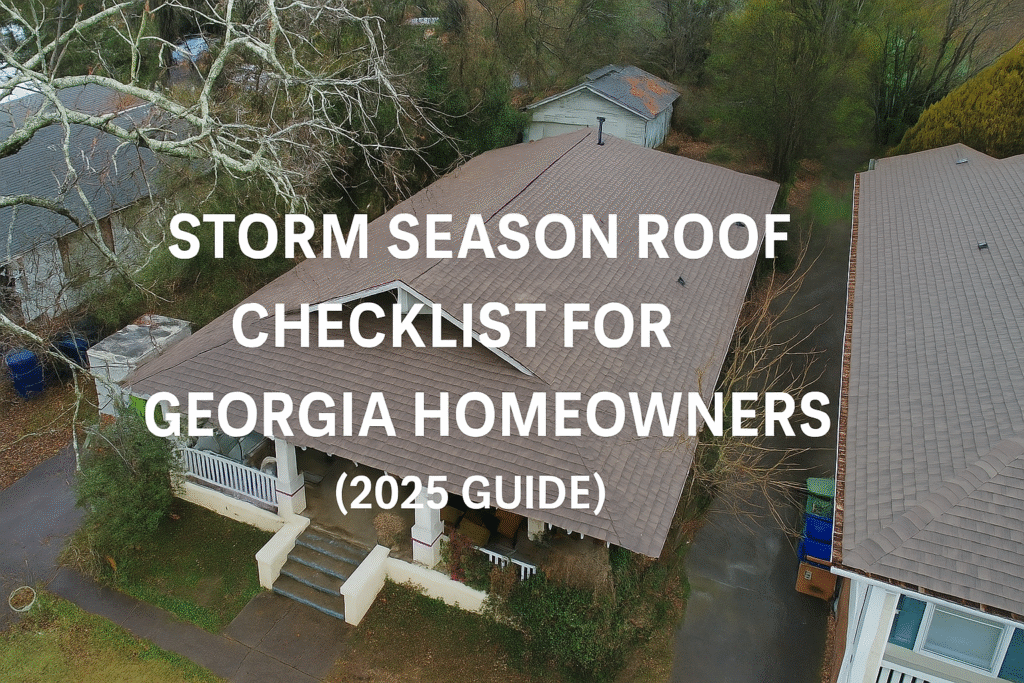
Every year, Georgia homeowners brace for storm season — from spring thunderstorms and hail to late-summer hurricanes and heavy rain. While you can’t control the weather, you can control how well your roof stands up to it.
Your roof is your home’s first line of defense. One small leak or loose shingle can quickly turn into thousands of dollars in water damage. That’s why creating a storm season roof checklist is essential for Georgia homeowners — especially those in storm-prone areas like Alpharetta, Cumming, Suwanee, and Johns Creek.
This comprehensive 2025 guide covers:
- A step-by-step pre-storm roof checklist
- What to inspect after a storm
- How to file insurance claims correctly
- Preventative maintenance to extend roof life
- Expert tips to protect your home before the next storm rolls through
Understanding Georgia’s Storm Season
Georgia’s weather can turn severe fast — hailstorms, high winds, and heavy rainfall are common from March through October, peaking in May–August.
Typical Georgia Storm Risks:
- Hailstorms: Hail as large as 2 inches causes shingle bruising and punctures.
- High Winds: Gusts exceeding 60 mph can lift or tear shingles.
- Torrential Rain: Heavy downpours test roof drainage and flashing.
- Fallen Debris: Tree limbs, pinecones, and flying debris can crack or puncture roofing.
- Tornadoes / Hurricanes (coastal impact): Stronger systems occasionally reach North Georgia.
If you live in Metro Atlanta or North Georgia, you’ve likely experienced at least one hail or wind event in the past few years. The key is preparation — long before the storm hits.
Pre-Storm Roof Preparation Checklist
Before storm season arrives, take the time to inspect, repair, and strengthen your roofing system. Here’s your step-by-step checklist for Georgia homeowners:
1. Schedule a Professional Roof Inspection
Have your roof inspected by a licensed local roofer before storm season begins.
They’ll check for:
- Missing, curled, or cracked shingles
- Loose flashing or nail pops
- Granule loss on asphalt shingles
- Weak or damaged roof valleys
- Signs of previous hail or wind impact
Pro Tip: Many reputable roofers (like Roofers & Contractors) offer free storm damage roof inspections and document existing conditions for insurance purposes.
2. Inspect Gutters, Downspouts, and Drainage
Clogged gutters cause rainwater to back up under shingles, leading to leaks.
- Clean gutters and downspouts of leaves, pine needles, and debris.
- Check for sagging sections or leaks.
- Ensure downspouts extend several feet away from your foundation.
If you live under heavy tree cover, install gutter guards to reduce buildup.
3. Trim Overhanging Trees
Overhanging branches are a major source of roof punctures during storms.
- Trim any limbs within 6–10 feet of your roofline.
- Remove dead or weak limbs that could fall in high winds.
- Have tall trees inspected by an arborist after winter freezes.
4. Check Flashing and Seals
Flashing around chimneys, vents, and skylights is a common leak point.
- Ensure flashing is properly seated and sealed.
- Replace deteriorated caulk or sealant.
- Tighten any loose fasteners.
Small flashing leaks can go unnoticed until the next downpour — and by then, the damage may already be done.
5. Reinforce Shingles and Fasteners
Loose shingles are easily lifted by strong wind gusts.
- Secure or replace missing shingles immediately.
- Ask your roofer to inspect ridge caps and vent areas — these often go first.
- Use high-wind-rated shingles if replacing your roof this year.
6. Examine Roof Accessories
Check your vents, satellite dishes, solar panels, and skylights.
- Make sure attachments are secure.
- Replace cracked vent boots or pipe collars.
- Seal any penetrations through the roof decking.
7. Inspect the Attic
The attic is often the first place to show signs of leaks.
- Look for stains, damp insulation, or daylight through decking.
- Check for musty odors — a sign of moisture intrusion.
- Ensure vents aren’t blocked to maintain proper airflow.
8. Review Your Insurance Policy
Know what’s covered before a storm hits.
- Confirm your deductible and coverage for hail, wind, or storm damage.
- Check policy limits for roof replacement costs.
- Keep a copy of your policy and roofing documentation in a safe, waterproof location.
9. Document Your Roof Condition
Take clear, dated photos of your roof and exterior.
- Capture multiple angles of shingles, gutters, flashing, and vents.
- Keep digital copies stored online or in the cloud.
This will be critical if you need to prove pre-storm condition to your insurance adjuster later.
What to Do During a Georgia Storm
When storms hit, safety comes first.
- Stay indoors and away from windows.
- Avoid going outside to “check the roof.”
- Watch for water intrusion, ceiling leaks, or electrical hazards.
- If damage occurs, document from a safe distance — photos from windows or the ground help initial claim reporting.
Post-Storm Roof Inspection Checklist
After the storm clears, perform a visual inspection — or, better yet, call a roofing professional to do it safely.
- Look for Obvious Roof Damage
- Missing or torn shingles
- Exposed decking or underlayment
- Loose flashing or vents
- Damaged soffits or fascia
- Check for Subtle Damage
Hail doesn’t always cause leaks immediately. Look for:
- Small, dark circular bruises on shingles
- Granules collecting in gutters or around the foundation
- Soft spots or “spongy” shingles
- Dents on metal flashing, vents, or gutters
If you see any of these, schedule a hail damage roof inspection right away.
- Inspect Gutters and Drainage
After heavy rain, inspect for:
- Detached sections or loose fasteners
- Clogged downspouts
- Overflow or pooling around your home’s foundation
- Examine Attic and Ceilings for Leaks
Inside your home, check for:
- Water stains on ceilings or walls
- Damp insulation
- Musty smells in attic spaces
- Active dripping during rain
Early leak detection can prevent thousands in mold remediation costs.
- File an Insurance Claim (If Needed)
If storm damage is confirmed:
- Contact your insurance company immediately.
- Provide photos and inspection reports.
- Request an on-site adjuster visit.
- Have your licensed roofer present during the adjuster’s inspection to ensure nothing is missed.
A qualified contractor like Roofers & Contractors can handle the process from documentation through replacement — ensuring you receive full coverage.
Preventive Roof Maintenance Between Storms
Even after the storm season ends, regular upkeep is vital to protect your investment.
Schedule Semi-Annual Roof Inspections
Ideally, one in spring (before storm season) and one in fall (after).
These checkups catch early signs of:
- Wind lift
- Shingle granule loss
- Flashing gaps
- Underlayment wear
Clean Debris and Maintain Proper Drainage
Fallen leaves, pine needles, and dirt retain moisture — which leads to rot.
- Sweep off debris from valleys and gutters.
- Wash algae growth with a soft cleaning solution.
- Inspect downspouts regularly for clogs.
Keep Records
Maintain:
- Inspection reports
- Repair receipts
- Photos of completed work
Documentation not only helps with insurance but also improves resale value when you sell your home.
Emergency Roof Repair Tips for Georgia Homeowners
If your roof sustains damage during a storm and immediate repairs are needed:
- Tarp the Damaged Area (If Safe) — Use thick, waterproof tarps secured with boards or weights.
- Avoid Climbing During Wet Conditions — Wait for a professional roofer if unsure.
- Document Everything — Before, during, and after temporary fixes.
- Call Your Roofer ASAP — Quick action prevents secondary damage.
Roofers & Contractors offers 24/7 emergency roof tarping and inspection throughout Alpharetta, Cumming, and North Atlanta.
Storm Season Roofing Myths (Debunked)
Myth 1: “If it’s not leaking, it’s fine.”
Wrong — leaks can take months to appear after hail or wind damage. Hidden moisture under shingles causes rot and insulation damage.
Myth 2: “My insurance won’t cover small damage.”
Incorrect — even minor hail impacts can shorten roof lifespan. Most policies cover functional damage, not just visible leaks.
Myth 3: “I can inspect the roof myself.”
While you can do a basic visual scan, professional roofers have safety equipment and tools (like drones and moisture meters) to detect hidden damage accurately.
H2: Why Choose Roofers & Contractors for Storm Protection in Georgia
At Roofers & Contractors, we specialize in helping Georgia homeowners prepare for and recover from storm damage.
Our Services Include:
- Free roof inspections
- Hail and wind damage reports
- Insurance claim assistance
- Emergency tarping and temporary repair
- Full roof replacements using GAF and Owens Corning materials
Related Pages:
FAQs — Georgia Storm Season Roof Prep
Q1: When is storm season in Georgia?
Typically from March through October, with peak activity in May–August.
Q2: How often should I inspect my roof?
At least twice a year — before and after storm season — and after any major weather event.
Q3: How can I tell if hail damaged my roof?
Look for circular dark bruises, granule loss, or dents on flashing and gutters. Always confirm with a professional inspection.
Q4: Will insurance pay for storm-related roof damage?
Yes, if it’s caused by covered perils like hail or wind. Your deductible will apply.
Q5: How can I prevent future storm damage?
Regular inspections, strong underlayment, proper ventilation, and timely repairs dramatically reduce risk.
Georgia’s storm season is unpredictable — but your home doesn’t have to be vulnerable. With a proactive maintenance plan and professional inspections, you can protect your roof and your family from costly storm damage.
Before the next big storm hits, schedule your free roof inspection with Roofers & Contractors. Our team will walk you through your storm season roof checklist, identify risks, and ensure your roof is ready to weather anything Georgia throws your way.
Call today or request an inspection online — and safeguard your home before storm season arrives.