
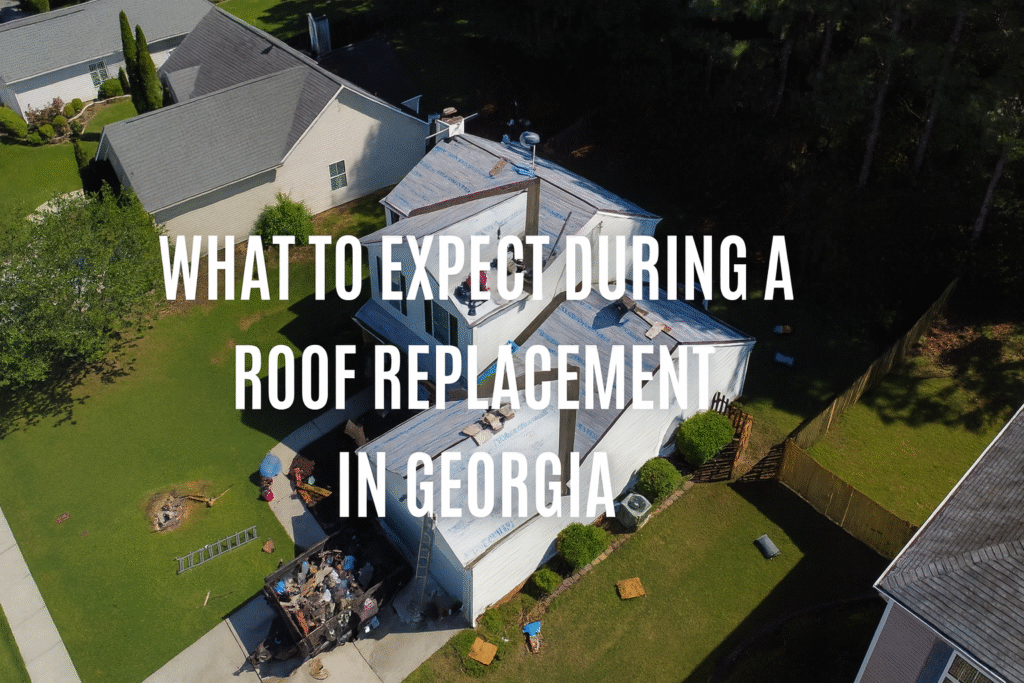
Replacing your roof can feel overwhelming — especially if it’s your first time. Between noisy tear-offs, weather delays, and insurance coordination, it’s easy to wonder: What exactly happens during a roof replacement in Georgia?
At Roofers & Contractors, we believe that informed homeowners make confident decisions. Whether you’re dealing with storm damage in Alpharetta, age-related wear in Cumming, or simply upgrading your home’s look, this guide will walk you through the entire roof replacement process — from the first inspection to final cleanup.
Step 1 – The Initial Roof Inspection and Estimate
Before any work begins, a professional roofing inspection is essential.
What Happens During the Inspection
A certified Georgia roofing contractor will:
- Examine shingles, flashing, vents, and gutters for visible damage
- Check the decking and attic for leaks or rot
- Assess storm or hail damage for insurance eligibility
- Take high-resolution photos for documentation
Afterward, you’ll receive a written estimate detailing:
- Recommended materials
- Replacement scope (full vs partial)
- Labor and cleanup costs
- Expected duration and warranty terms
Local Insight:
In Georgia, many inspections double as storm-damage assessments, especially after hail events in Forsyth, Gwinnett, and Fulton Counties. If damage qualifies, your homeowner’s insurance may cover most of the cost (minus your deductible).
Step 2 – Choosing Materials and Scheduling the Replacement
Once you approve the estimate, it’s time to pick the roofing material.
Popular Roofing Options in Georgia
| Material | Average Cost Range | Lifespan | Best For |
| Asphalt Shingles | $8K–$15K | 20–25 years | Most homes; budget-friendly |
| Architectural Shingles | $12K–$20K | 25–30 years | Style + durability |
| Metal Roofing | $18K–$35K | 40–70 years | Energy efficiency; modern look |
| Tile Roofing | $20K–$40K | 40–50 years | Mediterranean/Spanish homes |
Tip:
Choose materials that match Georgia’s humid, storm-prone climate. Metal and architectural shingles resist wind and heat better than basic 3-tab shingles.
Scheduling the Work
Most replacements are scheduled 1–3 weeks after approval, depending on:
- Weather forecasts (rain and humidity are key factors)
- Material availability
- Insurance claim timing
Step 3 – Preparing Your Property
Before installation begins, preparation ensures your home and yard stay safe.
How Roofers Prepare Your Property
- Protecting landscaping – Tarps and plywood are used to cover shrubs, decks, and patios.
- Moving vehicles – Driveways are cleared for the dumpster and delivery trucks.
- Delivering materials – Shingles, underlayment, and ridge vents arrive a day before work starts.
- Safety setup – Roofers install ladder stabilizers and safety harnesses.
Pro Tip:
Ask your contractor to notify neighbors if large dumpsters or nail guns will be in use — especially in HOA-governed Georgia neighborhoods like Alpharetta, Johns Creek, and Milton.
Step 4 – The Tear-Off (Removing Your Old Roof)
The tear-off is often the noisiest and messiest day — but it’s crucial for long-term roof integrity.
The Process
- Crews remove old shingles, underlayment, and nails
- Expose and inspect the roof decking
- Replace any rotted or damaged wood panels
- Prepare the clean surface for new materials
Duration:
Most homes take 1–2 days for a full tear-off, depending on size and complexity.
Why It’s Important:
Skipping a full tear-off (and doing an overlay instead) may void manufacturer warranties and hide damage — something Georgia’s humidity can quickly worsen.
Step 5 – Installing the Underlayment and Flashing
Before shingles go on, your contractor installs protective barriers that prevent leaks.
Underlayment
A waterproof layer (synthetic felt or ice & water shield) goes directly over the decking to keep out moisture — especially important during Georgia’s spring storms.
Flashing
Metal flashing is placed around:
- Valleys and roof joints
- Chimneys
- Skylights
- Roof edges
Proper flashing prevents leaks — a common cause of water stains on Georgia ceilings.
Step 6 – Installing the New Roofing Material
Now the visible part begins — the new roof installation.
How It Happens
- Starter shingles are installed along the edges for a sealed base.
- Main shingles or panels are laid row by row, overlapping for protection.
- Ridge vents and caps are installed at the roof peak to ensure ventilation.
- Sealing and alignment checks are made to maintain straight lines and weather-tight seams.
Average Installation Time:
- Asphalt roof: 1–2 days
- Metal roof: 2–4 days
- Tile roof: 4–7 days
Georgia Note:
Because of the state’s hot summers, early-morning starts and midday breaks are common. Asphalt shingles must cool properly before sealing to prevent blistering.
Step 7 – Cleanup and Final Inspection
The final step makes your property look like nothing ever happened (except for your brand-new roof).
Cleanup Includes:
- Sweeping for nails with magnetic rollers
- Hauling away old shingles and debris
- Clearing gutters of granules and dust
- Checking downspouts for blockages
After cleanup, a final walkthrough ensures:
- Flashing and vents are sealed
- Shingle alignment is perfect
- All waste is removed
- Warranty documents are signed
Step 8 – Post-Installation Documentation and Warranty
You’ll Receive:
- Manufacturer warranty (materials)
- Workmanship warranty (labor)
- Photo documentation (for insurance or resale records)
Common Georgia Roof Warranties:
- Asphalt shingles: 25–30 years limited
- Architectural shingles: lifetime limited
- Workmanship: 5–10 years, depending on contractor
Pro Tip:
Store these documents digitally and forward them to your home insurance provider — it can help you qualify for premium discounts.
What Affects the Duration of a Roof Replacement in Georgia
| Factor | Impact on Time |
| Weather (rain, humidity) | Delays installation by 1–3 days |
| Roof size and pitch | Larger or steeper roofs take longer |
| Material type | Tile and metal take more time than shingles |
| Existing damage | Decking repair adds extra days |
| Crew size | Larger teams finish faster |
On average, a Georgia roof replacement takes 1–5 days — longer if storms or inspections intervene.
Common Homeowner Concerns During Roof Replacement
“Will it be loud?”
Yes — expect hammering, scraping, and footsteps from 7 AM–6 PM.
“Do I need to be home?”
Not necessarily. Many Georgia homeowners work remotely or leave for the day. Just ensure pets and valuables are safe indoors.
“Will my yard be damaged?”
Professional roofers use tarps and clean-up magnets to prevent damage, but always confirm this in your contract.
“Can roof replacement void my insurance or warranty?”
No, as long as licensed contractors perform the work and follow code. Avoid DIY or unlicensed labor — Georgia insurers can deny future claims if improper installation is discovered.
H2: Georgia Roofing Codes and Local Permits
Before installation, your contractor must comply with Georgia building codes and county regulations.
Examples:
- Fulton County: Requires roofing permits for full replacements
- Gwinnett County: Mandates ventilation compliance (IRC R806)
- Forsyth County: Inspections needed before and after tear-off
Roofers & Contractors handle all necessary permitting and inspections — ensuring your new roof is fully compliant and insurable.
After the Roof Replacement — Maintenance Tips
Your new roof is built to last, but regular care keeps it strong:
- Inspect after major storms for loose shingles or flashing damage.
- Clean gutters every season to prevent backup and rot.
- Trim nearby trees to reduce impact and debris.
- Schedule annual inspections — especially before storm season.
When Insurance Covers Roof Replacement
If your roof was damaged by wind, hail, or falling debris, your homeowner’s insurance may pay for a full replacement.
Typical Coverage:
- Wind and hail damage
- Tree impact
- Debris penetration
You’ll only owe your deductible — not the entire replacement cost.
Important:
Georgia law prohibits contractors from waiving or rebating deductibles. Always choose a licensed roofer who follows these rules.
Why Choose Roofers & Contractors for Your Roof Replacement
At Roofers & Contractors, we specialize in helping Georgia homeowners get the roof they deserve — safely, efficiently, and affordably.
Why Homeowners Trust Us
Licensed & insured Georgia roofing experts
Insurance claim support
Lifetime workmanship warranty
Energy-efficient and storm-rated materials
Local crews serving North Atlanta, Alpharetta, Cumming, and Johns Creek
FAQs — Roof Replacement in Georgia
Q1: How long does a roof replacement take?
Most Georgia homes take 1–3 days; larger or tile roofs may take longer.
Q2: What’s the best season for roof replacement?
Spring and fall are ideal. Avoid peak summer heat or winter rains when possible.
Q3: Can I stay home during roof replacement?
Yes, but expect some noise and vibration.
Q4: Do I need a permit?
Yes — your contractor should handle county-specific roofing permits and inspections.
Q5: Will insurance cover my roof replacement?
If caused by wind, hail, or debris — yes. You pay your deductible, and insurance covers the rest.
A roof replacement doesn’t have to be stressful — especially when you know what to expect. From inspection and material selection to final cleanup, every step ensures your home stays safe and beautiful for decades to come.
If you’re ready to start your roof replacement in Georgia, reach out to Roofers & Contractors today for a free, no-obligation inspection and insurance-backed estimate.
Call now or book online — your new roof starts with a simple inspection.