
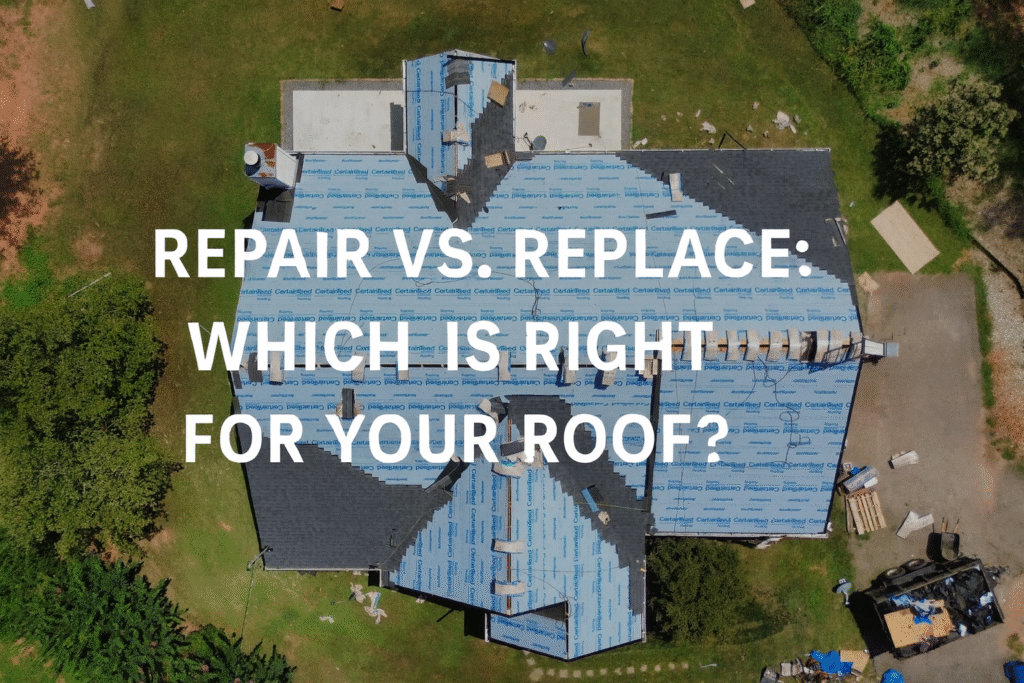
Your roof protects your home, family, and everything inside it — but what happens when it starts showing signs of wear? Should you repair the problem or go for a full roof replacement?
For Georgia homeowners, this question comes up often, especially after storms, hail, or simply years of southern sun exposure. The decision depends on several factors — age, damage extent, material, and cost-effectiveness.
In this guide, you’ll learn:
- How to tell when roof repair is enough
- When replacement makes more sense
- How Georgia’s climate affects roof life
- The cost breakdown of both options
- How insurance can influence your choice
Understanding Roof Repair vs. Roof Replacement
Let’s define the difference first.
- Roof Repair:
Fixes localized damage (like missing shingles, leaks, flashing issues, or hail dents). It’s quicker and cheaper but limited in scope. - Roof Replacement:
Involves tearing off the old roof down to the decking and installing a new system (underlayment, shingles, flashing, vents). It’s a larger upfront investment but resets your roof’s lifespan.
Each approach has pros and cons depending on your situation — let’s break them down.
Signs You Can Repair Your Roof
If your roof is generally in good condition and only small sections are damaged, repair may be the best route.
Here are the signs roof repair is likely sufficient:
1. Minor or Isolated Damage
- A few missing or cracked shingles
- Localized leaks near vents or flashing
- Limited wind or hail impact
Repairs can often restore functionality without full replacement, especially for newer roofs.
2. Roof Age Under 10–15 Years
If your roof is still relatively young and was properly installed, it may still have plenty of life left.
- Asphalt shingles typically last 20–25 years.
- Architectural shingles can go 30 years or more with maintenance.
Repairing newer roofs makes financial sense when damage is limited.
3. No Widespread Curling or Buckling
If most shingles still lie flat and intact, spot repairs may be effective.
Warped or curled shingles, however, signal the beginning of roof failure.
4. No Major Structural Issues
If decking, trusses, and underlayment remain sound, repairs are usually fine. But if leaks have rotted the substrate, replacement is the better long-term move.
5. Damage Covered by Insurance
If your roof sustained storm or hail damage, insurance may pay for a partial repair (or total replacement). Your adjuster will help determine which is more appropriate.
Signs It’s Time to Replace Your Roof
Sometimes, repairs are just temporary patches. Here are the red flags that mean it’s time to invest in a full roof replacement.
1. Roof Age 20+ Years
In Georgia’s heat and humidity, most asphalt roofs start failing after two decades.
- Shingle granule loss accelerates UV degradation.
- Sealants and flashing dry out.
- The roof loses structural integrity.
If you’re spending money on repairs every season, replacement is likely overdue.
2. Widespread Shingle Damage
If large areas of shingles are missing, curling, or cracked, the underlying roof system is compromised. Patching won’t restore waterproof protection.
Rule of thumb: If more than 30% of your roof is damaged, replacement is usually more cost-effective.
3. Persistent Leaks or Water Stains
Multiple leaks — especially recurring ones — signal deeper issues like underlayment failure or deck rot. Water infiltration spreads quickly in Georgia’s humid environment.
If you’re patching the same areas repeatedly, it’s time for a full replacement.
4. Sagging or Uneven Roofline
A sagging roof indicates structural deterioration — possibly from rot, water damage, or weakened trusses. Repairs won’t address the root cause.
Full replacement ensures the deck and supports are properly inspected and reinforced.
5. Mold or Moisture in the Attic
Moisture in your attic doesn’t always mean leaks from above — it could also mean poor ventilation. But if you see mold, rot, or insulation damage, the roofing system is likely failing.
6. High Energy Bills
Old or compromised roofing systems allow heat to penetrate, raising cooling costs during Georgia summers.
Modern materials and reflective shingles improve insulation and energy efficiency — a hidden benefit of replacement.
Georgia Climate and Roof Lifespan
Georgia’s hot, humid summers and frequent storms shorten roof lifespans faster than in cooler regions.
Key Climate Factors:
- UV Exposure: Asphalt shingles deteriorate faster in direct sunlight.
- Humidity: Promotes algae, mold, and rot.
- Storms & Hail: Frequent damage from wind and debris.
- Thermal Shock: Temperature swings cause expansion and contraction that weakens seals and flashing.
Typical Georgia Roof Lifespans:
| Material | Lifespan (Georgia Average) | Notes |
| Asphalt 3-Tab | 18–22 years | Most common; lower cost |
| Architectural Shingles | 25–30 years | Better weather resistance |
| Metal Roofing | 40–70 years | Great for heat & hail |
| Tile | 40–50 years | Expensive, heavy |
| Flat/TPO | 15–25 years | For low-slope designs |
Cost Comparison — Roof Repair vs. Replacement in Georgia (2025)
| Type | Average Cost | Description |
| Roof Repair | $350 – $1,500 (minor) / $2,000 – $5,000 (major) | Fix localized leaks, damaged shingles, or flashing |
| Roof Replacement | $7,000 – $20,000+ | Full tear-off and new installation |
Repairs Are Cost-Effective When:
- Roof is younger than 15 years
- Damage is isolated
- No structural issues exist
Replacement Pays Off When:
- Roof exceeds 20 years
- Repairs exceed 30–40% of replacement cost
- Ongoing leaks persist
How Insurance Affects the Decision
Insurance coverage often determines whether you’ll repair or replace.
Insurance Covers Replacement When:
- Damage is sudden and accidental (hail, wind, falling debris).
- Roof is within the coverage lifespan.
- There’s enough functional damage to compromise integrity.
Insurance Usually Denies Claims When:
- Damage is due to neglect, age, or wear and tear.
- Maintenance records don’t exist.
- Roof exceeds coverage age limits (usually 20+ years for asphalt).
Tip: Always get a free inspection from a licensed roofer who can provide documentation and photos for your claim.
Pros and Cons — Repair vs Replacement
| Factor | Roof Repair | Roof Replacement |
| Cost | Low upfront | Higher initial cost |
| Longevity | Short-term fix | 20–50+ year reset |
| Coverage | Often covered partially | Full coverage possible with storm claim |
| Curb Appeal | May show patchwork | Looks brand new |
| Energy Efficiency | Minimal impact | Improves insulation & ventilation |
| Time | 1–2 days | 2–5 days |
| Return on Investment | Moderate | High (especially before sale) |
The Inspection Process — How to Decide Confidently
When you’re unsure, start with a professional roof inspection.
At Roofers & Contractors, our licensed inspectors perform:
- Comprehensive visual & drone inspection
- Moisture and hail impact testing
- Attic inspection for hidden leaks
- Detailed damage report with photos
- Transparent repair or replacement recommendation
Our goal is to save you money — if a repair will safely extend your roof’s life, we’ll tell you. If replacement is the smarter long-term choice, we’ll explain why with evidence.
The Hidden Cost of Delaying Roof Replacement
Waiting too long can turn small issues into expensive ones. Common risks of delay include:
- Structural Rot: Water damage spreads into decking and rafters.
- Interior Water Damage: Ceilings, insulation, drywall, and wiring suffer.
- Mold Growth: Moisture trapped inside attics or walls.
- Higher Insurance Costs: Some insurers reduce or deny coverage for neglected roofs.
If repairs are becoming routine, investing in a new roof can save thousands in the long run.
Roof Maintenance Tips to Extend Roof Life
Even after replacement, regular care keeps your investment strong:
- Schedule biannual inspections (spring & fall).
- Clean gutters regularly.
- Remove overhanging branches.
- Replace cracked flashing or vent boots promptly.
- Watch for early leak signs after storms.
Small preventive actions can add 5–10 years to your roof’s lifespan.
Why Georgia Homeowners Choose Roofers & Contractors
At Roofers & Contractors, we’re Georgia’s trusted roofing experts — combining technical skill, honest assessments, and licensed insurance adjuster support.
We Offer:
- Free roof inspections
- Honest repair vs. replace consultations
- Full insurance claim assistance
- 24-hour emergency response
- Lifetime workmanship warranty
Related Pages:
FAQs — Roof Repair vs Replacement
Q1: How often should I replace my roof in Georgia?
Most asphalt roofs last 20–25 years, depending on material and maintenance.
Q2: Is it better to repair or replace a leaking roof?
If leaks are isolated and the roof is under 15 years old, repair may work. Multiple leaks or aging materials indicate replacement.
Q3: How do I know if my roof is too old?
Curling shingles, missing granules, or recurring leaks often mean it’s nearing end-of-life.
Q4: Will insurance cover a new roof?
Yes, if the damage was caused by storms or other covered perils. Normal aging isn’t covered.
Q5: How can I get an inspection?
Contact Roofers & Contractors for a free, no-obligation inspection anywhere in North Georgia.
Knowing whether to repair or replace your roof is one of the most important decisions a homeowner can make.
If your roof is young and the damage is minor, repairs can buy you more time. But if your roof is aging, leaking, or showing widespread damage, replacement offers better long-term protection and value.
Call Roofers & Contractors today for a free inspection and honest assessment. Our experts will walk you through your options — repair or replace — so you can make the right choice for your Georgia home.